Mandala Art Therapy: Finding Your True Self Through Circles and Colors
In today's fast-paced world, our minds are often filled with stress, anxiety, and noise. Finding a simple, effective, and soul-touching way to decompress has become a common desire. Mandala art therapy is a key to unlocking inner peace and self-awareness.
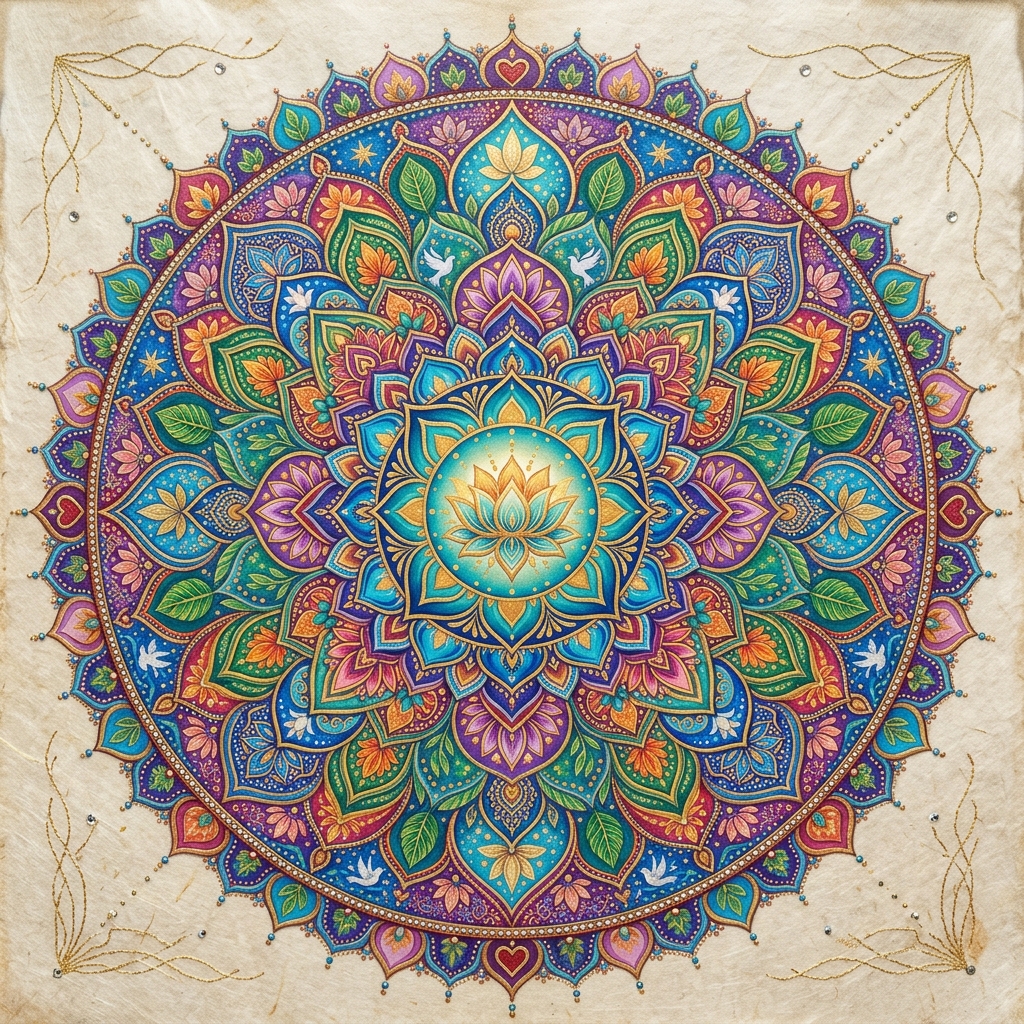
Mandala Art Therapy: Finding Your True Self Through Circles and Colors
In today's fast-paced world, our minds are often filled with stress, anxiety, and noise. Finding a simple, effective, and soul-touching way to decompress has become a common desire. Mandala art therapy is a key to unlocking inner peace and self-awareness.
What is Mandala Art Therapy?
The word "Mandala" originates from Sanskrit, meaning "circle" or "center." It is not merely a geometric pattern but an ancient psychological healing tool. Renowned psychologist Carl Jung was one of the first to introduce mandalas into Western psychotherapy. He discovered that drawing these radiating, symmetrical circular patterns naturally helps the human mind integrate and heal.
Simply put, mandala painting involves freely expressing yourself using lines, shapes, and colors within a "circle." This circle symbolizes a safe container that can hold all our emotions, whether it be joy, sorrow, or confusion.
How Does Mandala Painting Facilitate Healing?
- Mindfulness and Focus: As your pen moves across the paper and you focus on the symmetry of the patterns and color combinations, your brain naturally blocks out external distractions, entering a meditative "flow" state. This deep focus rapidly reduces anxiety levels and calms a cluttered mind.
- Silent Emotional Release: Sometimes, words fall short when expressing complex emotions. Mandala painting provides a non-verbal channel for expression. The colors you choose and the pressure of your lines tell the story hidden within your subconscious. Anger can be released through intense colors and sharp lines, while sadness can be gently soothed by soft tones.
- Finding Inner Order: Mandalas typically have a strong center point and a symmetrical structure. In the process of drawing, we are actually rebuilding inner order amidst emotional chaos. As the artwork becomes more complete, a sense of internal balance is established.
- Self-Awareness and Integration: Every mandala is a mirror of the creator's current state of mind. By reflecting on the artwork we've created, we can see ourselves more clearly, understand our hidden needs, and foster self-acceptance and the integration of our inner strength.
How to Start Your First Mandala Painting?
Many people might say, "But I don't have any drawing background!" Rest assured, mandala painting requires no artistic skills. It is about "expression," not "technique."
Materials Needed:
- A blank sheet of paper or a pre-drawn mandala coloring book.
- A set of your favorite drawing tools (colored pencils, markers, watercolors, etc.).
- A quiet, undisturbed space where you can play some soft background music.
Steps to Paint:
- Breathe and Connect: Close your eyes, take a few deep breaths, and feel your body and current emotions.
- Choose Freely: Open your eyes and intuitively pick the color that attracts you the most without overthinking.
- Start from the Center: If using blank paper, draw a circle first, then start from the center and draw patterns radiating outwards. If using a pre-drawn design, start coloring from the central area.
- Follow Your Heart: Let your pen move intuitively. Don't judge whether it looks "good" or not; allow everything to happen naturally.
- Gaze and Converse: Once finished, place the painting a bit further away and quietly look at it for a while. Ask yourself, "What does this painting make me feel?" or give it a name.
Conclusion
Mandala painting is a journey of self-exploration with no end. Every stroke is a conversation with your inner child; every splash of color is an awakening of life energy.
When you feel tired or lost, set aside some dedicated time for yourself, draw a circle, and let your soul slowly rediscover its peace and strength amidst the interplay of colors.